Knattspyrnudeild Keflavíkur FC: The Civic Superpower That Haunted My Football Manager Save.
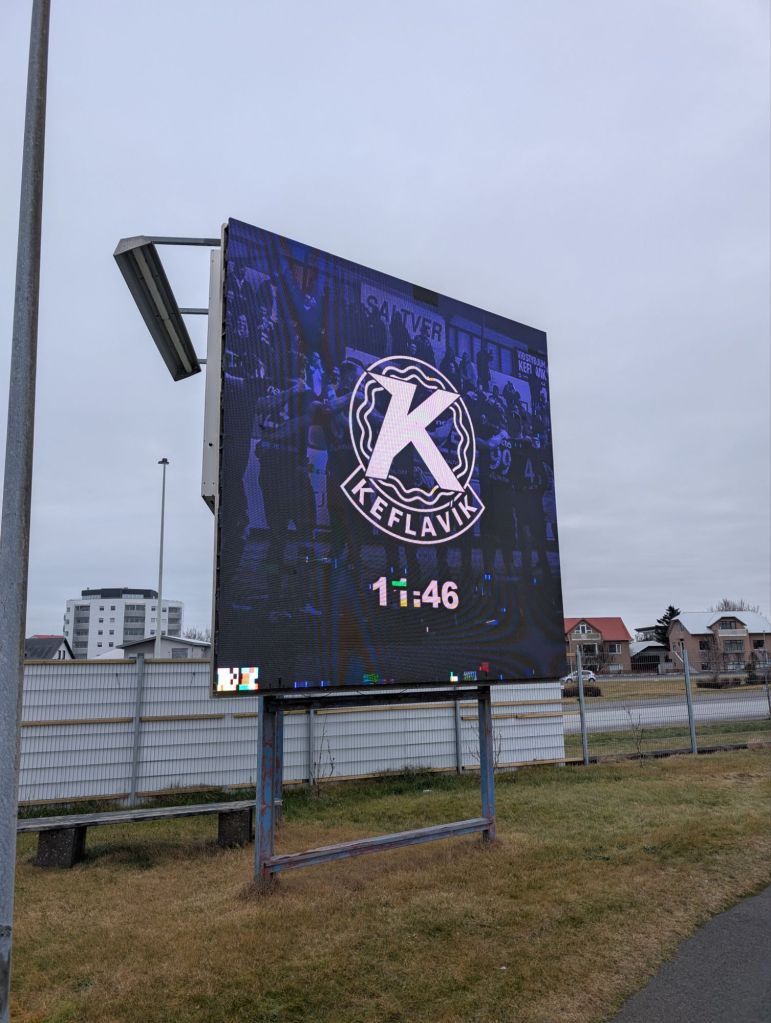
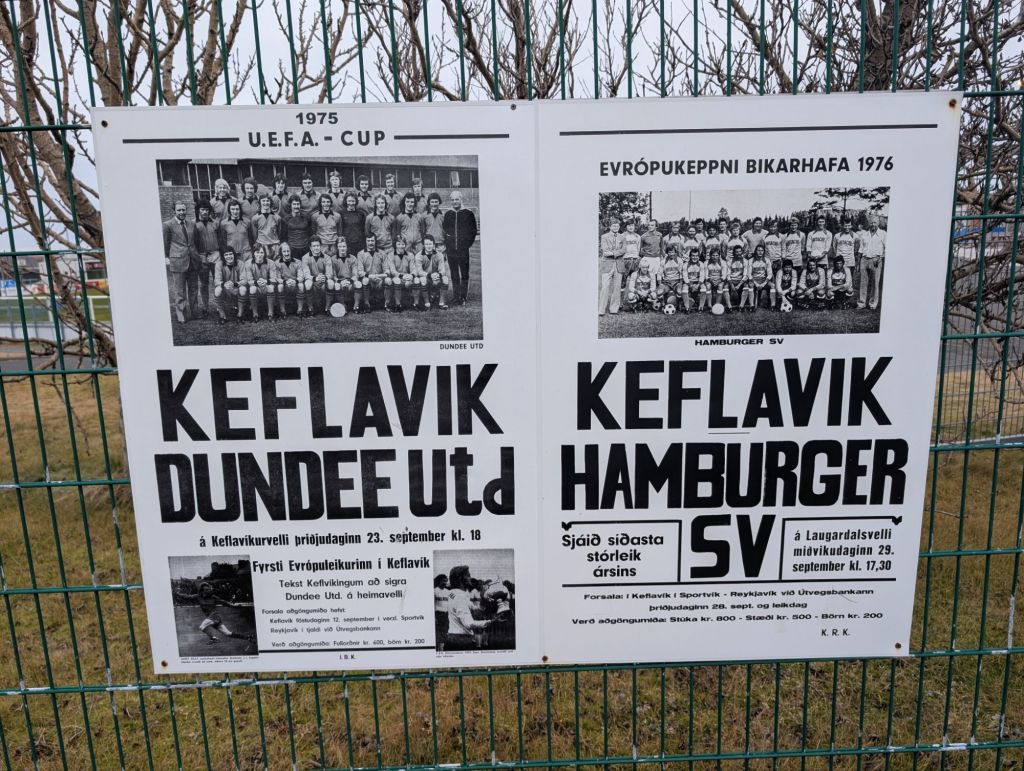
When you first arrive at Nettó-völlur, home of Knattspyrnudeild Keflavík — or simply “Keflavik FC” for those of us whose Icelandic extends only as far as ordering a half-time cheeseburger from their ground and hoping for the best. The first thing you notice are the boards. These aren’t just boards. These are monuments. Olympian slabs documenting Keflavik’s heroics against the heavyweights of European football: Hamburg, Dundee United (Andy Gray era, back when perms were an elite tactical choice), even the Intertoto Cup alumni of 2006. A competition so forgotten that even UEFA pretends it was a dream sequence.
Then there are the bragging rights framed for eternity: Everton in ’70. Spurs in ’71. Real Madrid in ’72. REAL. MADRID. The vibe is very much “Yes, we have been around the block, thank you. And we have the receipts printed, laminated and secured to a fence using the finest cable ties from Toolstation.” This club is the beating chest of the city, and these boards are its bragging Christmas cards to Europe.
In my Football Manager 2008 career, however, Keflavík were something else entirely. In the early years of my save, I despised facing them. Nearly as much as another team called FH, the perennial early-game fun sponge. Keflavík would ruthlessly collect my former players like a petty rival trying to send a message, only to deploy them with the footballing equivalent of pure spite
While they were busy celebrating a glorious Intertoto tie against Valletta, I was, and forgive the humble brag, beating Barcelona 2–1 in the 2023 Champions League final. In real life, I was sitting on a cot bed on Salisbury Plain eating a rat pack. In digital life, I was a tactical messiah with Icelandic football under my celestial thumb. The duality of man, etc.
And here’s the thing: Keflavík aren’t just good. They’re a superpower. A colossus. The kind of club kids around here grow up wanting to play for, the way British children grow up wanting to one day explain why their favourite Premier League team “isn’t actually a banter club, despite the evidence.”
Having visited Njardvík earlier in the day, this ground hit different immediately. The place hums with support. It’s Yeovil Town energy. But Yeovil Town after a glow-up, a cold plunge, and a long weekend with Graeme Souness whispering aggressively motivational things in its ear. Real Madrid’s Ignacio Zoco, Howard Kendall, Andy Gray – they’ve all walked on this turf. The pitch has seen more legends than an early 2000s celebrity rehab facility.
Inside, the clubhouse trophy room is an absolute unit. It’s bursting at the seams like a well-endowed gentleman in cycling shorts. Alarming, impressive, and impossible not to stare at while silently questioning your own choices. This is a club that wins. Habitually. Obsessively. Like it’s collecting Tesco Clubcard points in the run up to Christmas.
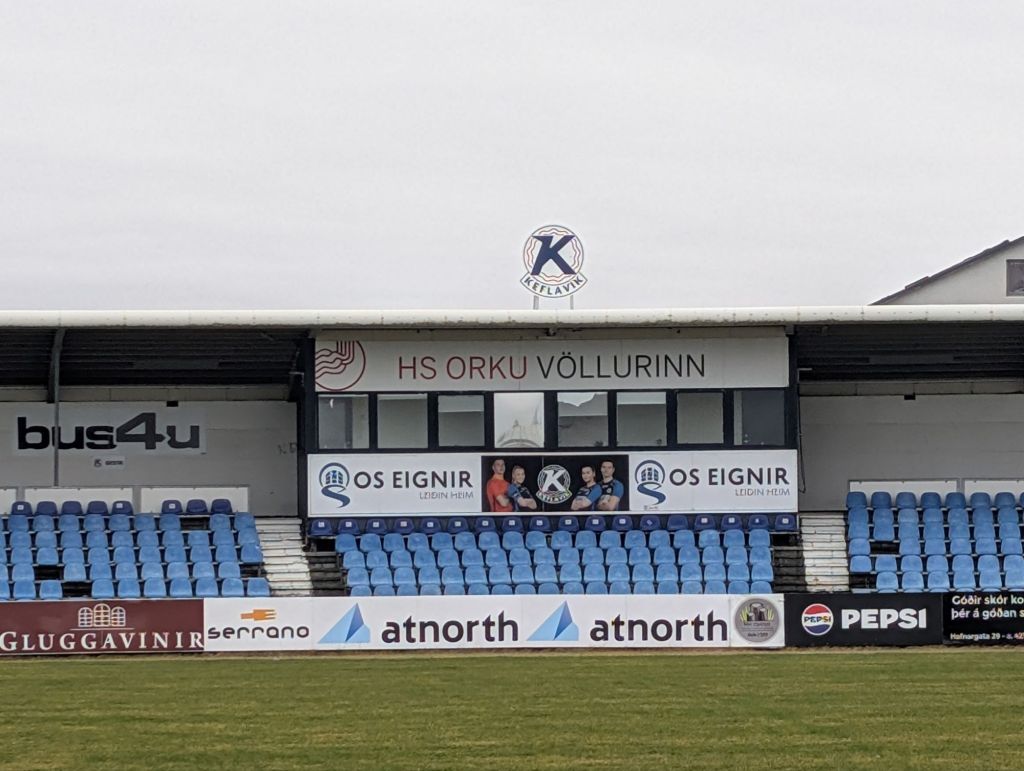
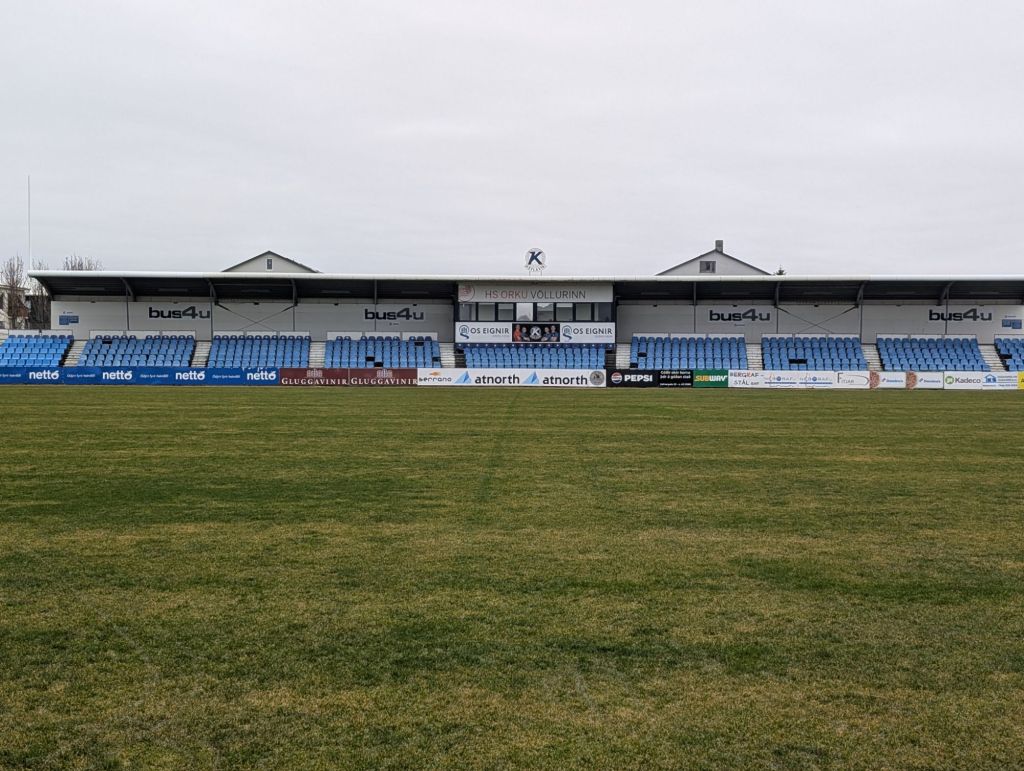
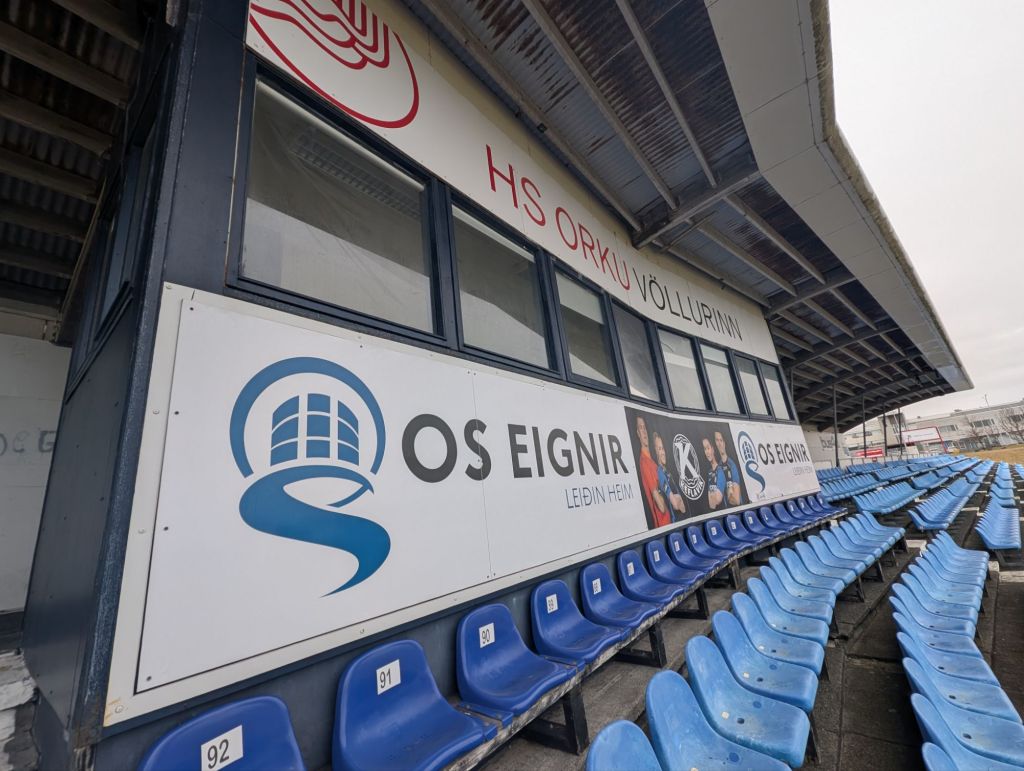
The stands are a delight: compact but slick, sheltering you from the elements while putting you right next to the commentary box. If you’re working for BBC Radio 5 Live, you’re basically calling the match from the cockpit of a fighter jet. The atmosphere would rattle your fillings.
And honestly? Visiting clarified so much about why my early Football Manager seasons were such a misery. Of course they were toppling me, this is an institution. A civic heartbeat. A multi-sport hydra with basketball, gymnastics, swimming, badminton, shooting, and taekwondo divisions. If you tried to fight the entire club staff, statistically at least eight of them could fold you into a small geometric sculpture.
The sponsors, too, were a joy. Arnorth. Gluggavinir. Pepsi. Bergrafstal. Subway. OS Eigner. And I swear one of them was Flugruger — the fictional airline from Call of Duty: Modern Warfare 2. Either Keflavík has branched into multiversal brand deals, or I need to drink more water.
And then there is some peak Icelandic whimsy on show in the form of a football tennis table. A monument to the delusion that hamstrings are eternal. Wonderful for headers and volleys; catastrophic for adults who once pulled a muscle reaching for a remote.
The club restaurant? Excellent. Priced at Icelandic levels. This will mean your eyes will water like someone’s just taken a direct free kick to your gentlemanly regions… In the freezing cold, but the food looked good. Respectably priced by local standards, which is to say: expensive, but not “I’ve just remortgaged my house” expensive.
All told, Keflavík FC is a giant. A winner. A cultural cornerstone. A club that has danced with Europe’s biggest and lived to brag about it. And walking around their ground, for a Football Manager tragic like me, was like stepping into a parallel universe where both my digital triumphs and real-world fandom could briefly shake hands and shout “Áfram Keflavík!” into the void.
 Lore: Building an Empire, One Pixel at a Time
Leave a comment